
How ZeroHunger.ai supported Ethiopian tech startups through strategy consulting, product ownership training, and software development process improvement across three field visits to Addis Ababa.
Between March 2023 and May 2024, ZeroHunger.ai sent a team of consultants to Addis Ababa three times to work with Ethiopian software companies. The mission: help a cohort of tech SMEs sharpen their products, fix their processes, and build businesses that could survive and grow in one of Africa’s most dynamic — and most challenging — startup environments.
This engagement was part of sequa gGmbH’s acceleration programme in Ethiopia, funded through German development cooperation, with the goal of creating sustainable, skilled jobs in the country’s emerging tech sector.
The Challenge: Talent and Ideas, but Weak Execution
Ethiopia’s tech scene has no shortage of ambition. Addis Ababa is home to a growing community of software companies building everything from e-commerce platforms and mobile payment systems to e-tutoring apps and logistics solutions. What many of these companies lacked was not ideas or technical talent, but the operational discipline to turn promising products into viable businesses.
Our assessment, conducted through in-depth discussions with leadership teams and analysis of each company’s products, data, and processes, revealed a pattern that will be familiar to anyone who has worked with early-stage tech companies in emerging markets:
- Lean methodology was absent. With rare exceptions, companies were not iterating based on user feedback. Instead, they were building large, feature-heavy products without validating whether customers actually wanted what was being built.
- Make-or-buy decisions were poorly made. Companies were building custom solutions for problems already solved by open-source software, wasting scarce engineering resources on undifferentiated work.
- Data-driven decision-making was rare. Most companies had no analytics on their revenue drivers, user behavior, or product performance. The few that collected data were often focused on the wrong metrics.
- Execution was the bottleneck. Strategy documents and product visions existed, but the gap between plan and delivery was consistently wide.
These are not Ethiopian problems — they are universal early-stage company problems. But in a market with limited access to mentorship, venture capital, and experienced product managers, the consequences are more severe. Several of the companies we assessed faced existential risks that could have been mitigated with basic product management discipline.
Our Approach: Embedded Consulting Across Three Field Visits
Unlike a traditional consulting engagement that delivers a report and leaves, our work in Ethiopia was structured around repeated on-site visits combined with remote follow-up. This model — grounded in the reality that behavior change requires sustained presence, not just advice — shaped everything we did.
Visit 1: Assessment and Relationship Building (March 2023)
The first two-week visit focused on understanding the landscape. We met with each company’s leadership, reviewed their products, and conducted needs assessments. For some companies, the most important intervention at this stage was simply asking the right questions: Who is your customer? What problem are you solving? How do you know it is working?
We also connected with the sequa team on the ground, led by Jochen Moninger, whose organization had built a vital piece of infrastructure for the Addis Ababa tech ecosystem — coworking spaces, acceleration sprints, and a community that gave startups access to peers, mentors, and resources they would not otherwise have.
Visit 2: Workshops and Targeted Interventions (June 2023)
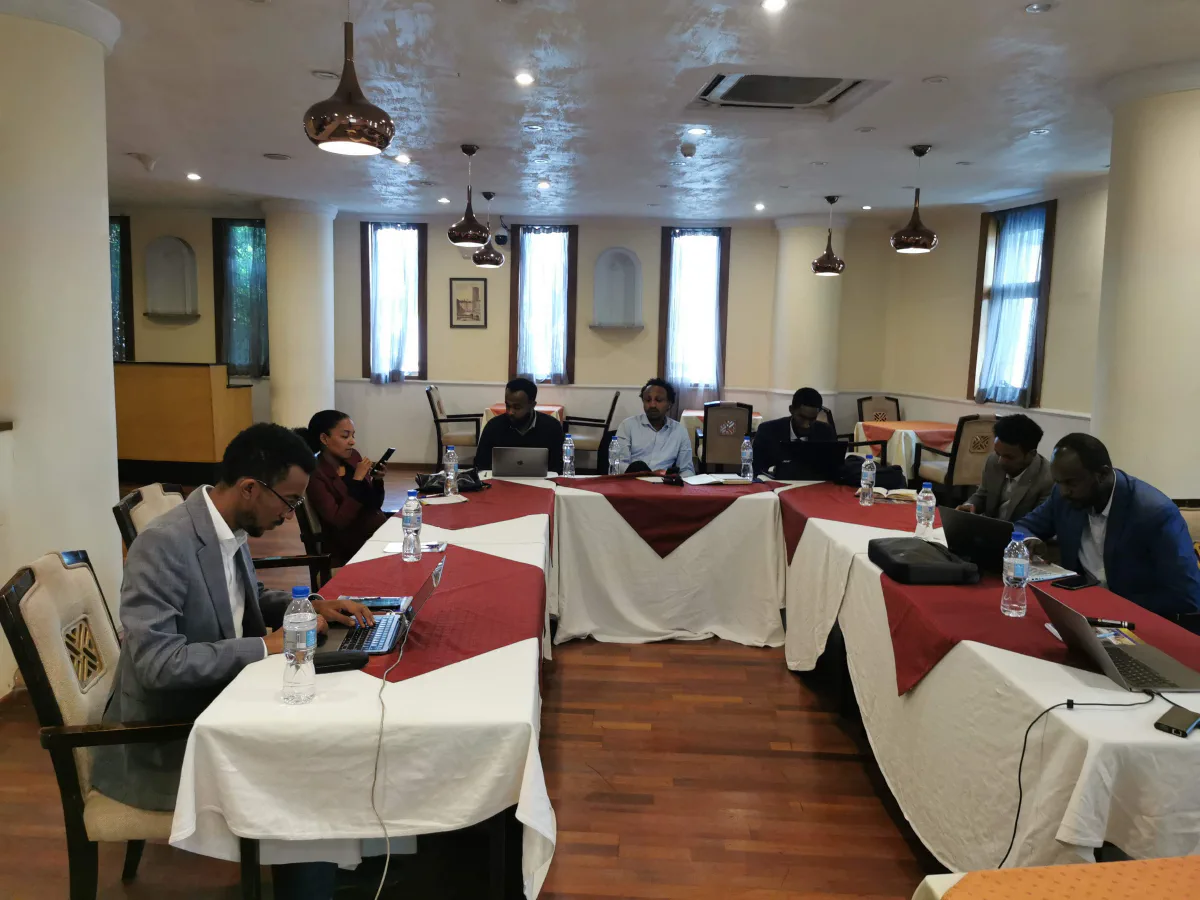
The second visit was where the hands-on work began. Based on our assessments, we delivered tailored interventions for each company:
- Strategy consulting for companies that needed to narrow their focus. One company was running 18 separate products — far too many for its team size to execute well on any of them.
- Product ownership training to help founders and team leads learn how to prioritize features, manage backlogs, and make data-informed decisions about what to build next.
- User-centric design workshops to shift companies away from building what they assumed users wanted and toward actually testing assumptions with real people.
- Software development process analysis for companies whose engineering teams were struggling with delivery cadence, quality, and coordination.
- OKR workshops to give companies a practical framework for aligning teams around measurable outcomes rather than activity-based goals.
- Campaign and go-to-market training for companies that had built products but had no structured approach to acquiring customers.
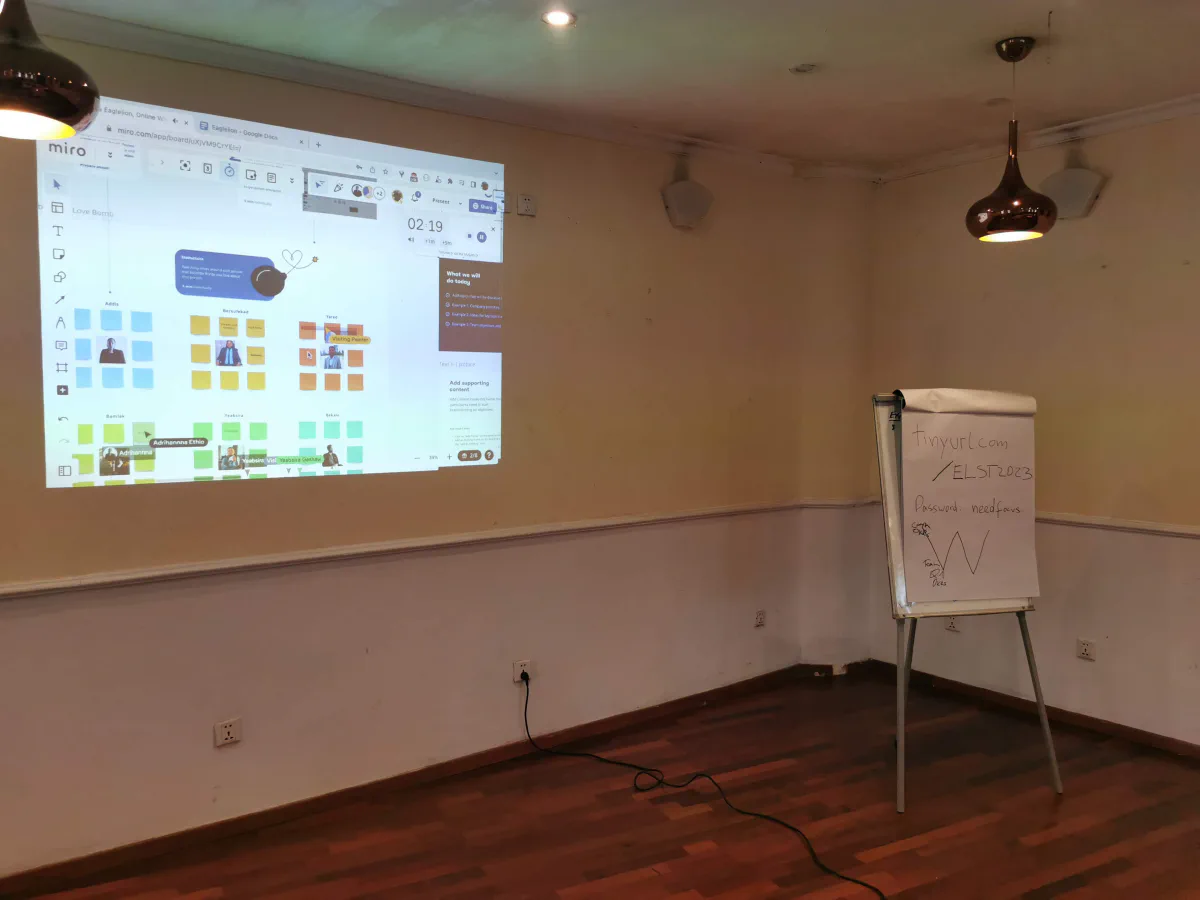
We also ran collaborative sessions using Miro for remote-friendly strategy mapping, allowing companies to continue the work after we left.
Visit 3: Follow-Up and Advanced Support (May 2024)
The third visit focused on progress review and deeper technical interventions. By this point, some companies had made significant strides — refining their products, improving their development processes, and beginning to operate with more discipline. Others had pivoted or consolidated, which in many cases was itself a positive outcome.
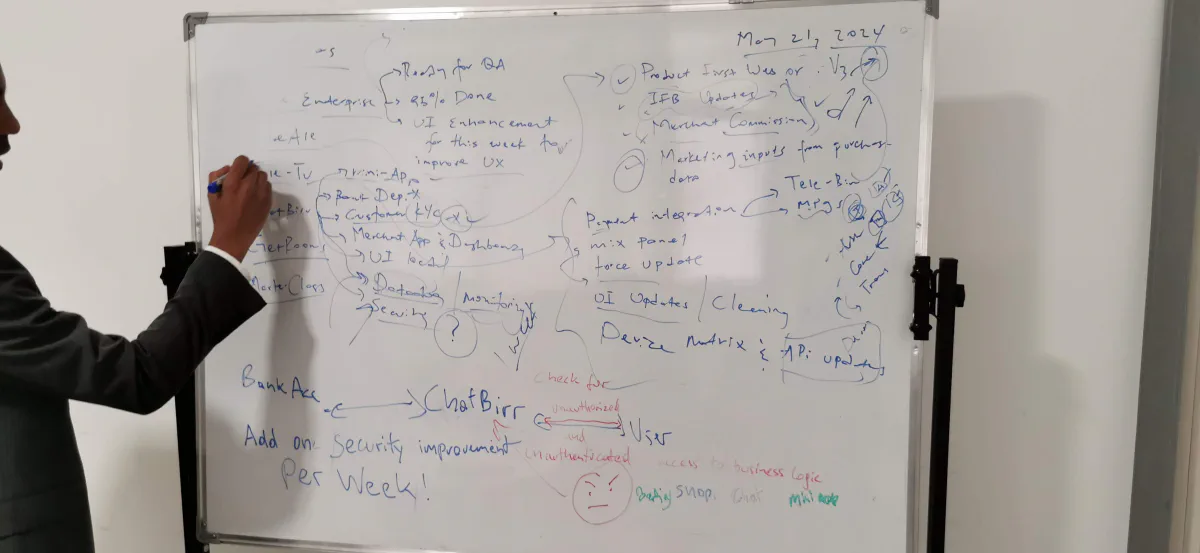
This visit included hands-on whiteboard sessions on product architecture, security improvement roadmaps, and payment integration strategy — the kind of specific, tactical work that only becomes possible once the foundational strategy and process work is in place.
The Companies We Worked With
The cohort represented a cross-section of Ethiopia’s tech sector:
| Company | Product Focus | Key Intervention |
|---|---|---|
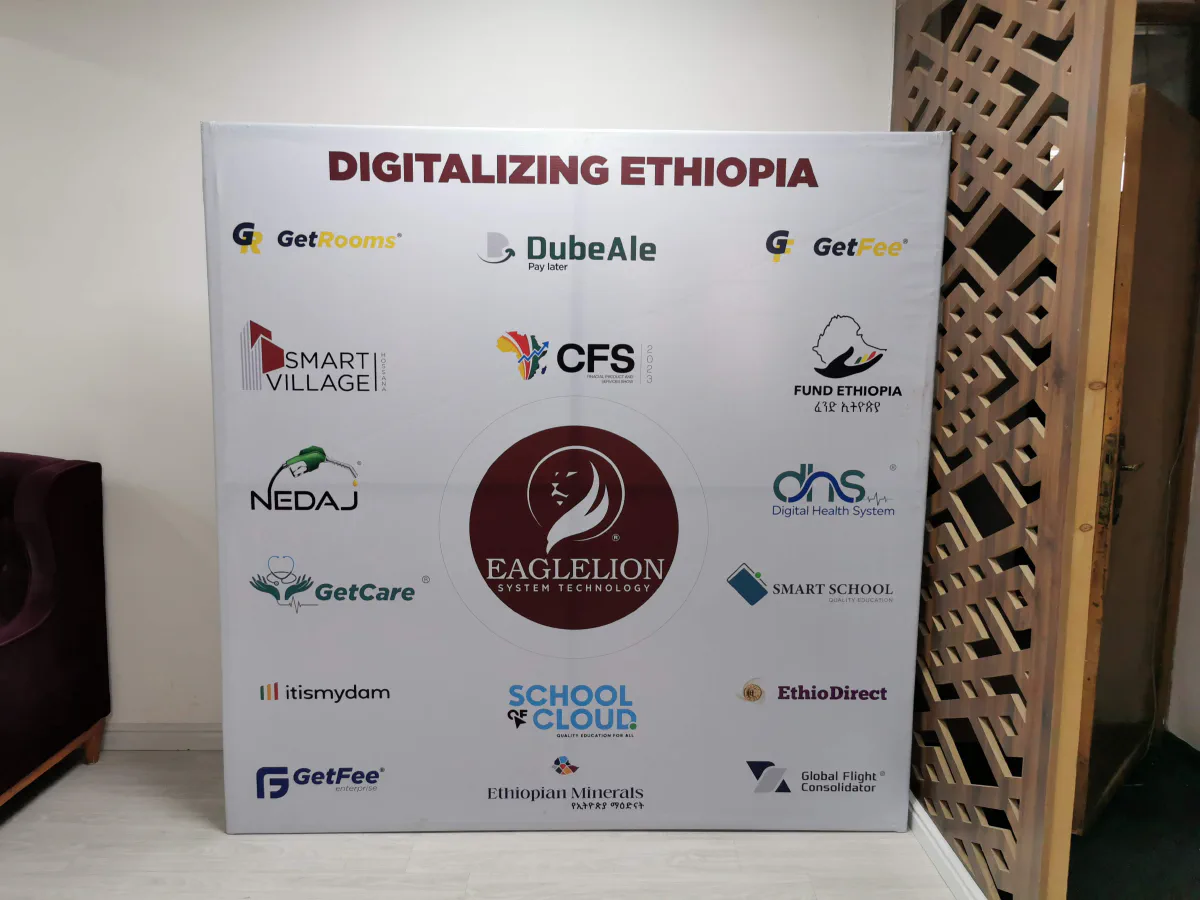
| Eaglelion Systems Technology | Multi-product software house (18 products) | Focus strategy, team-level OKRs |
| Ashewa | E-commerce platform and ERP | Strategy, OKR workshops |
| Afra Import Export PLC | Buy2Go delivery platform | Campaign support, user-centric design, dev process |
| GoTech Technologies | Falcon logistics platform | Lean methodology, venture design |
| Haleta | eTutoring education platform | Customer retention strategy |
| Eziti | TaskMoby task management | Needs assessment |
| JakTech Engineering | Multiple products (YeAbrak, Dama) | Needs assessment |
| Kabana Design | Design and leather goods | Business assessment |
| equb.app | Digital savings groups | Assessment |
| Momona | Digital services | Assessment |
Each company received a tailored mix of support based on where they were in their journey. For some, the most valuable thing we could do was help them decide what not to build. For others, it was introducing a structured development process where none had existed.
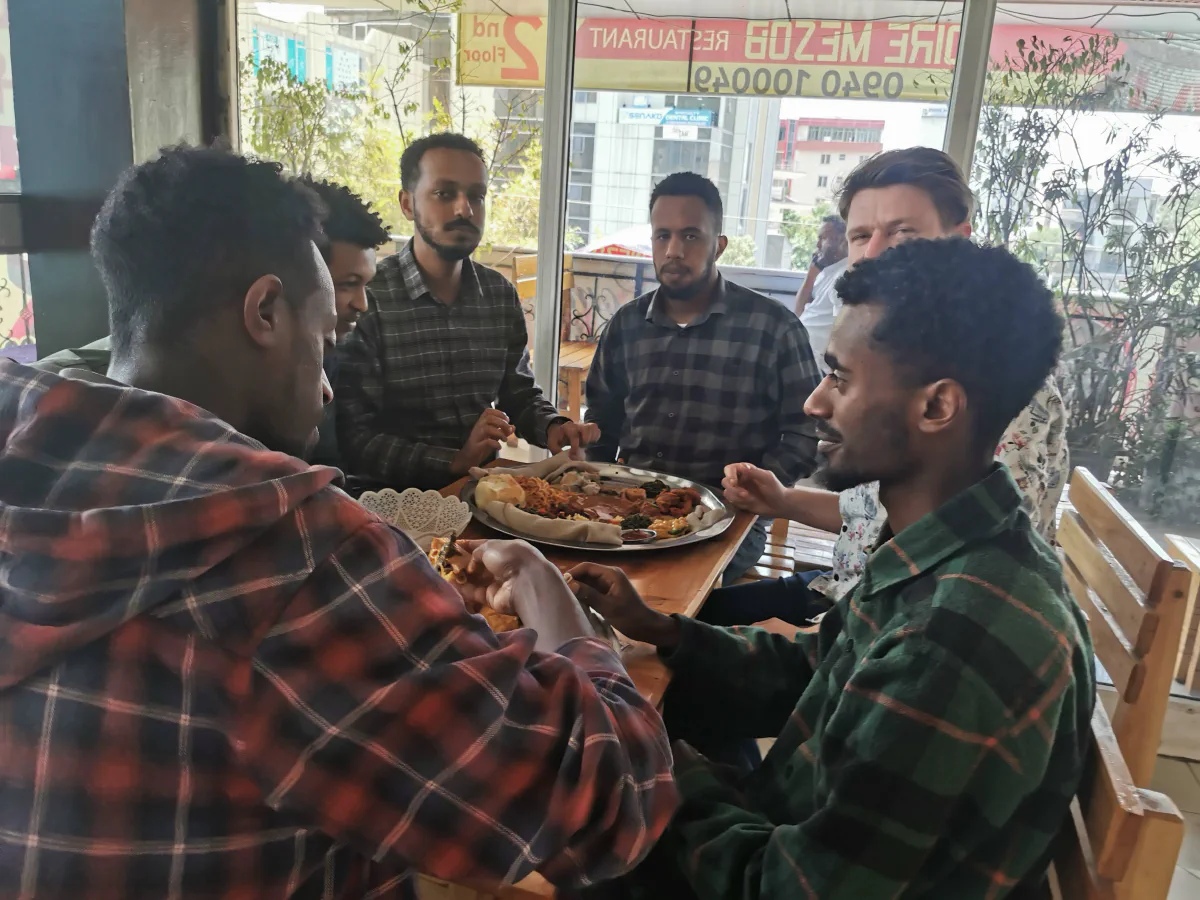
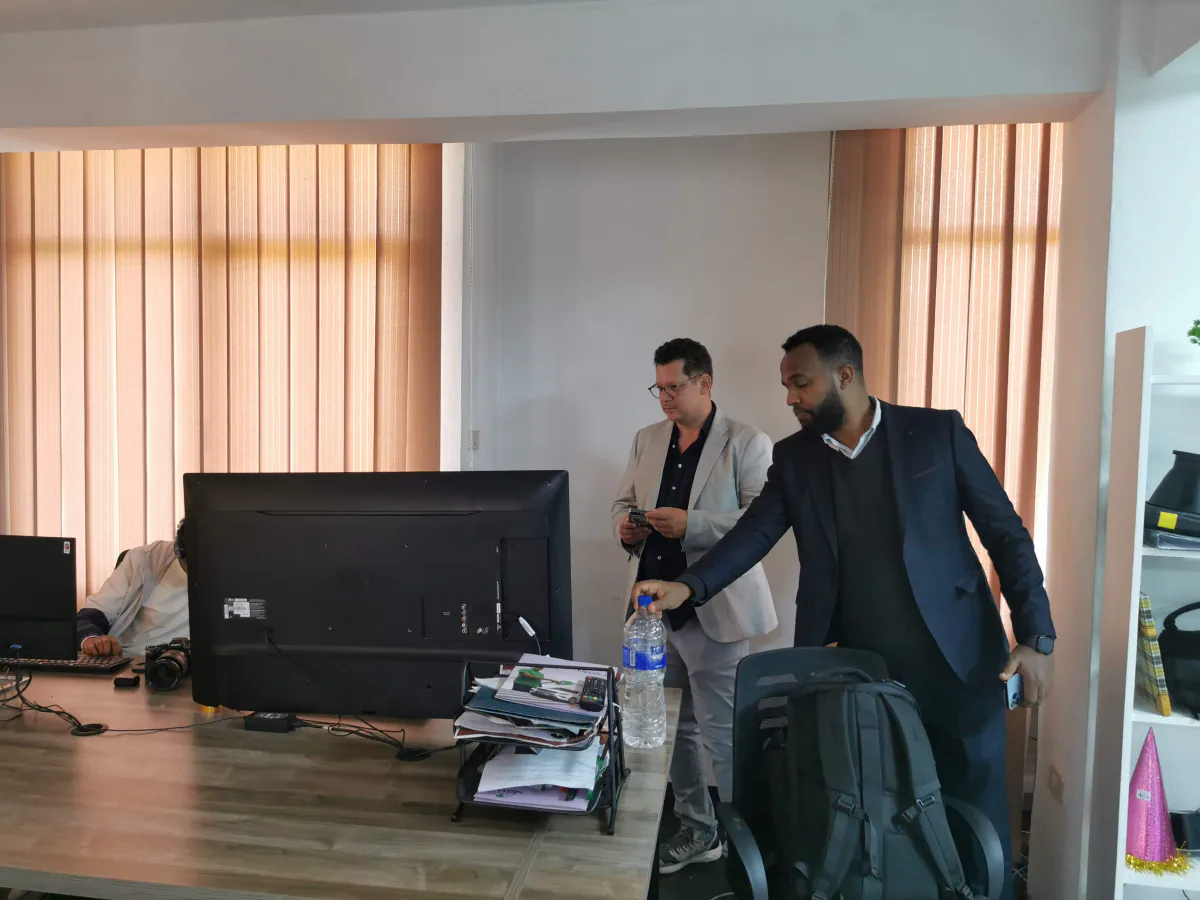
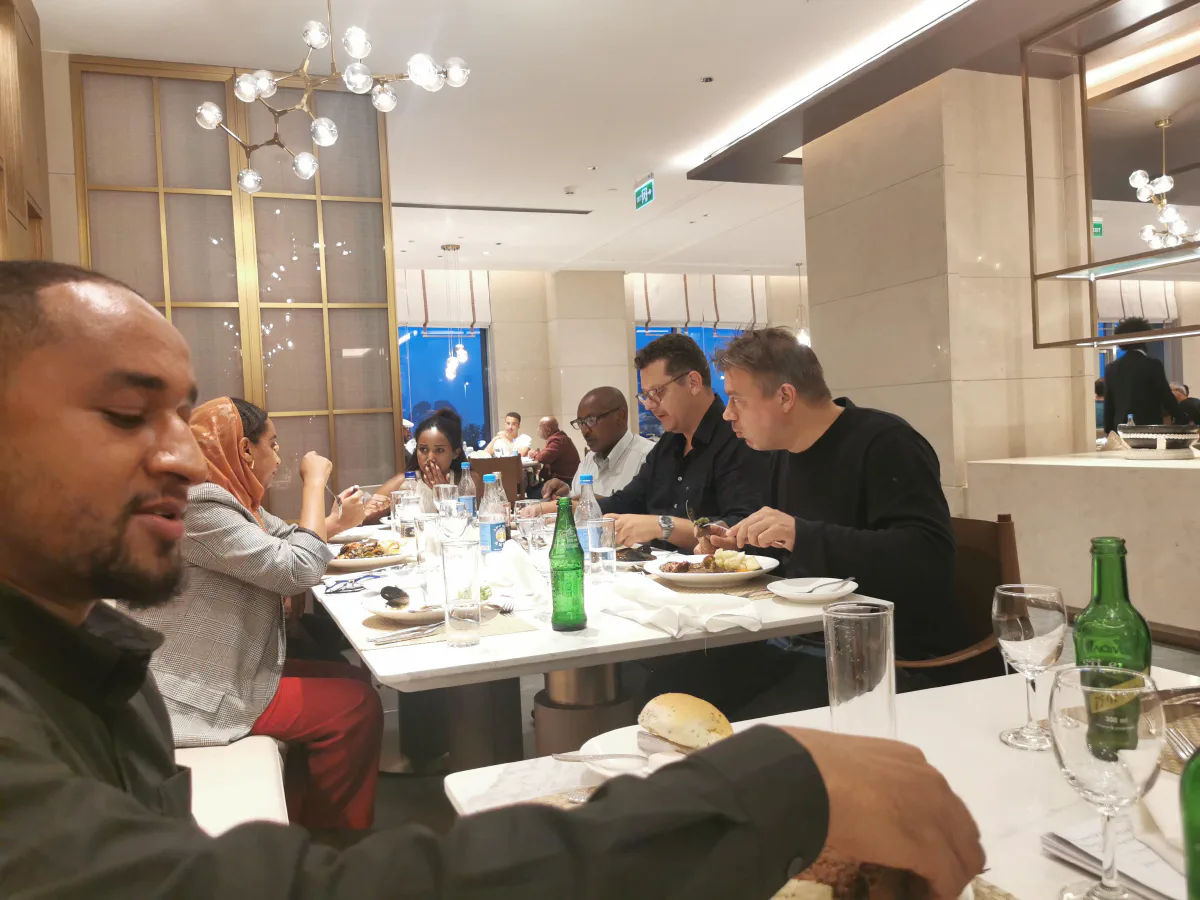
Photos from the Field

The Ecosystem: Why the sequa Model Works
A critical factor in this project’s design was the sequa ecosystem already in place. Jochen Moninger and his team had built something rare in East Africa: a functioning support infrastructure for tech startups that included coworking spaces, peer networks, and structured acceleration activities.
This matters because consulting interventions in isolation — flying in experts for a week and leaving — rarely produce lasting change. The sequa infrastructure gave companies a place to continue practicing what they had learned, a community of peers facing similar challenges, and a point of contact for follow-up questions long after the consultants had returned to Europe.
Our recommendation to sequa was to treat this ecosystem as a lighthouse example for other developing countries. The model of combining international expert consulting with strong local infrastructure and community is one of the more effective approaches to tech capacity building that we have encountered.
Lessons Learned
Start with strategy, not code. The most impactful interventions were not technical — they were strategic. Helping a company with 18 products understand that it needed to focus on three was worth more than any amount of code review.
Repeated visits beat longer single engagements. Three two-week visits over 18 months gave companies time to implement changes between visits and allowed us to assess what actually stuck versus what was just enthusiasm in the moment.
Local infrastructure is the multiplier. Our consulting would have had far less impact without the sequa coworking spaces and community. The companies that engaged most actively with the local ecosystem showed the most improvement.
Data discipline is the hardest change. Teaching a team to use Miro or run a sprint is relatively straightforward. Getting them to actually instrument their products, collect user data, and make decisions based on evidence rather than intuition is a much longer process — and the single most important capability for long-term success.
Not every company should survive. Some of the companies in the cohort were building products for markets that did not exist or were too fragmented to support a venture-backed business. Helping founders recognize this early — before they spent years of their lives on a losing proposition — is a legitimate and valuable consulting outcome.
What Comes Next
The Ethiopia engagement demonstrated that targeted consulting combined with strong local ecosystem support can meaningfully accelerate the development of tech companies in emerging markets. The model has since informed our broader approach to international development technology work.
As of 2024, we continue to engage with the Ethiopian tech ecosystem, exploring opportunities to identify and recruit high-potential AI builders in Ethiopia for collaborative product development work. The relationships built during the sequa acceleration programme — with companies, with the local tech community, and with the support organizations that make the ecosystem function — provide the foundation for this next chapter.
This project was conducted as part of sequa gGmbH’s acceleration programme for Ethiopian tech SMEs, funded through German development cooperation (BMZ). ZeroHunger.ai provided expert consulting services for product strategy, software development processes, and organizational development.